I casinò non AAMS rappresentano una realtà sempre più diffusa nel panorama del gioco online. A differenza dei casinò AAMS, che sono regolamentati e garantiscono una certa sicurezza per i giocatori, i casinò non AAMS operano in mercati meno controllati. Questa differenza si riflette non solo nella regolamentazione, ma anche nella varietà di giochi e nelle modalità di interazione tra i giocatori. I vantaggi dei casinò non AAMS includono una maggiore libertà di scelta e bonus più allettanti, come quelli offerti dai migliori casino non aams, ma i rischi legati alla sicurezza e alla trasparenza sono significativi.
Differenze tra Casinò AAMS e Non AAMS
Le principali differenze tra casinò AAMS e non AAMS riguardano la regolamentazione e la protezione dei giocatori. I casinò AAMS sono soggetti a leggi rigorose che garantiscono la sicurezza dei giocatori, mentre i casinò non AAMS hanno più libertà, ma anche meno protezione. Questo differente contesto normativo influisce sulla fiducia dei giocatori e sulla scelta del casinò.
Vantaggi e svantaggi dei Casinò Non AAMS
I casinò non AAMS offrono vantaggi come una gamma più ampia di giochi e bonus più generosi. Tuttavia, i giocatori devono affrontare svantaggi come la mancanza di protezione legale e il rischio di pratiche di gioco poco etiche. È fondamentale che i giocatori facciano ricerche approfondite prima di scegliere un casinò non AAMS, per evitare sorprese sgradevoli.
Storia dei Giochi Multigiocatore
I giochi multigiocatore hanno una lunga storia nei casinò, evolvendosi da semplici giochi da tavolo a esperienze online complesse. Inizialmente, i giochi multigiocatore erano limitati a pochi tipi, ma con l’avvento della tecnologia, le opzioni sono aumentate esponenzialmente. Questo ha portato a una crescente popolarità di giochi come il poker e il blackjack, dove i giocatori possono interagire tra loro in tempo reale.
Origini dei giochi multigiocatore nei casinò
Le origini dei giochi multigiocatore nei casinò risalgono a secoli fa, con giochi tradizionali come il poker che hanno sempre incoraggiato l’interazione tra i giocatori. Con il passaggio al gioco online, le piattaforme hanno cominciato a sviluppare esperienze più coinvolgenti, consentendo ai giocatori di sfidarsi in ambienti virtuali.
Evoluzione tecnologica e impatto sui giochi
L’evoluzione tecnologica ha avuto un impatto profondo sui giochi multigiocatore. L’introduzione di internet ha reso possibile il gioco a distanza e ha permesso l’interazione tra giocatori di tutto il mondo. Tecnologie come il live streaming e la realtà virtuale hanno trasformato l’esperienza di gioco, rendendola più coinvolgente e realistica.
Innovazioni nei Giochi Multigiocatore
Negli ultimi anni, i casinò non AAMS hanno visto un’espansione significativa dell’innovazione nei giochi multigiocatore. Le nuove tipologie di giochi e formati hanno catturato l’attenzione di un pubblico sempre più vasto, offrendo esperienze uniche e personalizzate.
Nuove tipologie di giochi e formati
Le innovazioni nei giochi multigiocatore includono l’emergere di giochi cooperativi e competitivi, che permettono ai giocatori di collaborare o sfidarsi in tempo reale. Queste nuove forme di gioco hanno attratto anche i giovani, favorendo un rinnovato interesse nei confronti dei casinò online.
L’uso della tecnologia live per esperienze immersive
La tecnologia live ha rivoluzionato il modo in cui i giochi multigiocatore vengono fruibili. Attraverso tavoli da gioco dal vivo, i giocatori possono interagire con croupier in tempo reale, ricreando l’atmosfera di un casinò fisico. Questa esperienza immersiva è stata ben accolta, aumentando l’attrattiva dei casinò non AAMS.
L’Impatto della Gamification
La gamification è diventata un elemento chiave nei casinò non AAMS, trasformando l’approccio al gioco. Incorporando elementi di gioco in contesti non ludici, i casinò possono aumentare l’engagement dei giocatori e migliorare l’esperienza complessiva.
Cosa significa gamification nei casinò
La gamification nei casinò implica l’uso di elementi come punti, classifiche e sfide per incentivare i giocatori. Questo approccio non solo rende il gioco più divertente, ma incoraggia anche la fedeltà del cliente attraverso meccanismi di ricompensa.
Esempi di gamification nei giochi multigiocatore
Esempi di gamification nei giochi multigiocatore includono tornei, missioni e ricompense per i giocatori più attivi. Questi elementi non solo aumentano il coinvolgimento, ma creano anche una comunità attiva e partecipativa intorno ai giochi.
Regolamentazione e Sicurezza nei Casinò Non AAMS
La mancanza di regolamentazione nei casinò non AAMS può rappresentare un rischio significativo per i giocatori. Tuttavia, molti casinò adottano misure di sicurezza per garantire un ambiente di gioco sicuro.
Come la mancanza di regolamentazione influisce sui giocatori
La mancanza di regolamentazione può portare a pratiche di gioco poco etiche e a una minore protezione dei dati personali. I giocatori devono essere consapevoli di questi rischi e scegliere casinò che dimostrino un impegno per la sicurezza e la trasparenza.
Misure di sicurezza adottate dai casinò
Molti casinò non AAMS implementano protocolli di sicurezza per proteggere i dati dei giocatori, inclusi sistemi di crittografia e audit di sicurezza regolari. È essenziale che i giocatori verifichino queste misure prima di registrarsi.
Tendenze Future nei Giochi Multigiocatore
Le tendenze future nei giochi multigiocatore nei casinò non AAMS indicano un’evoluzione continua e innovativa. Si prevede un aumento della personalizzazione e dell’interazione sociale nei giochi.
Previsioni per l’evoluzione dei giochi nei casinò non AAMS
Gli esperti prevedono che i giochi multigiocatore continueranno a evolversi, integrando ulteriori tecnologie come la realtà aumentata e nuove modalità di interazione. Questa evoluzione potrebbe portare a esperienze di gioco ancora più coinvolgenti e immersive.
L’importanza della community e del social gaming
La creazione di comunità attorno ai giochi multigiocatore è fondamentale per il loro successo. I casinò non AAMS stanno investendo nella costruzione di piattaforme sociali che incoraggiano l’interazione tra i giocatori, rendendo il gioco un’esperienza condivisa.
Conclusione e Riflessioni Finali
Il futuro dei casinò non AAMS appare promettente, con un focus crescente sull’innovazione e sull’esperienza del giocatore. Tuttavia, è cruciale che i giocatori siano informati e consapevoli dei rischi associati. L’innovazione continua nei giochi multigiocatore sarà fondamentale per mantenere l’interesse e la fiducia dei giocatori.
Il futuro dei casinò non AAMS
Con l’evoluzione della tecnologia e delle preferenze dei consumatori, i casinò non AAMS potrebbero trasformarsi in veri e propri hub di intrattenimento, offrendo esperienze uniche e coinvolgenti.
L’importanza dell’innovazione continua nei giochi multigiocatore
In un mercato in continua evoluzione, l’innovazione è la chiave per il successo. I casinò devono rimanere agili e pronti ad adattarsi alle nuove tendenze per attrarre e mantenere i giocatori.
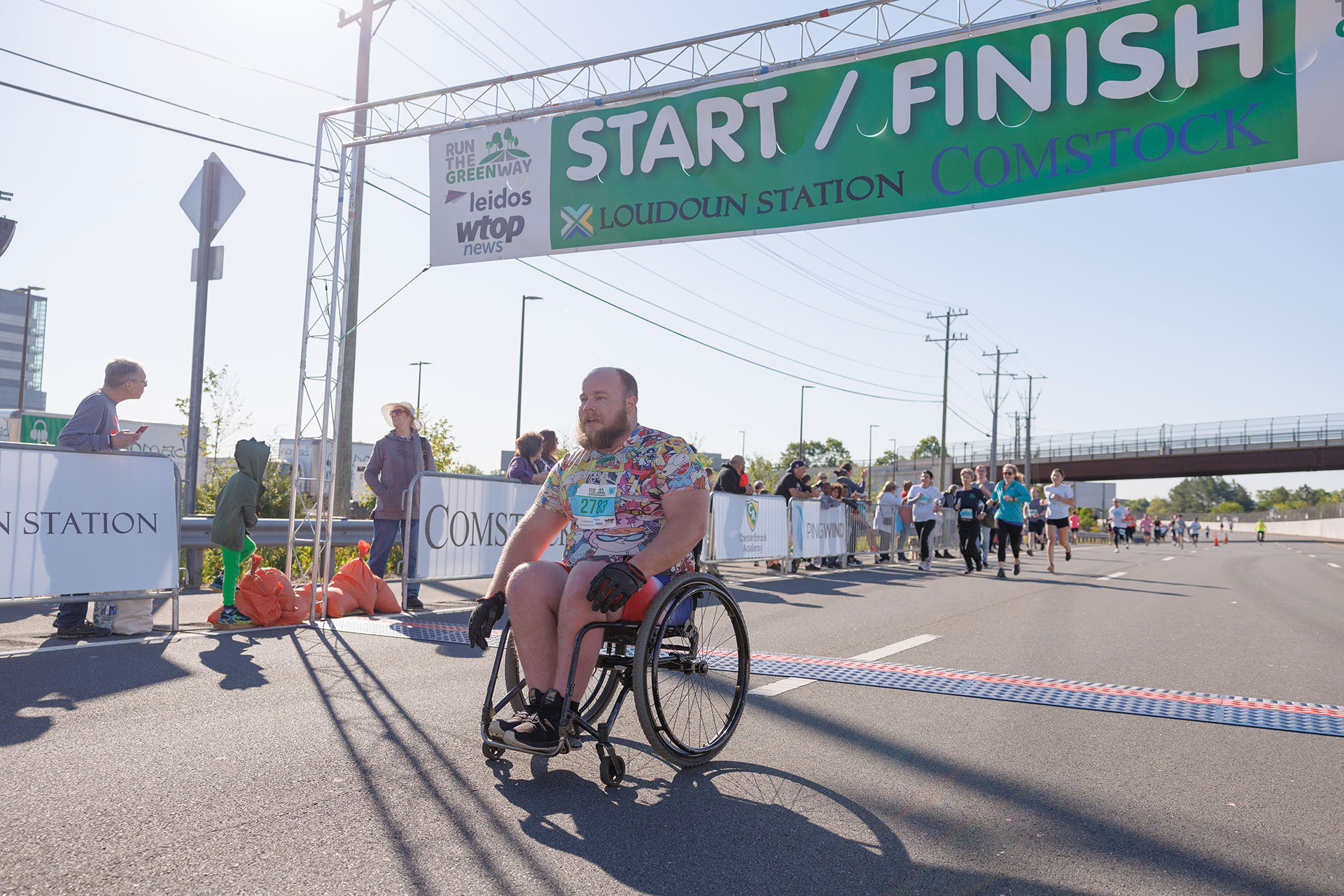
Leesburg, VA — April 12, 2024 — Wheelchair users for the first time will have their own race category in this year’s Run the Greenway Saturday, May 4 at Loudoun Station, putting them in competition for medals, glory and prizes. First, second and third place overall finishers in the new Roll 5K category will win medals and a gift card to PR Run & Walk. That’s welcome news to the team at Ability Fitness Center at The Arc of Loudoun, the nonprofit that partnered with the Dulles Greenway to make Run the Greenway wheelchair accessible two years ago. Many of the competitors on the Ability Fitness Center team use assistive technology such as wheelchairs to complete the race—including Anthony Ringenberg, the first wheelchair finisher in both years of Run, Walk or Roll the Greenway. He said the best part of the race is the finish line.
“It’s like working through the suck, and getting to the end and feeling the burn, and knowing that hey, I did it,” he said. “And also being number one. That’s a nice thing.”
This year, for the first time, Ringenberg might take home a gold medal for his accomplishment.
“If we had more people, there might be someone out there who can beat me,” Ringenberg said. “Might be.”
Run the Greenway marks a big day each year for the Ability Fitness Center team. It’s a return to form for M.J. Weier, who before a spinal injury was a competitive cyclist.
“One of the reasons I like competition and this particular event is that it gives me something to train for,” she said. “Rather than just going and doing it just to get exercise, it gives me a reason to do it, it gives me a goal to try and improve my time.”
And although it’s measured in kilometers, it sometimes marks a milestone, such as for Lindsay Roberts. In the first Run, Walk or Roll the Greenway two years ago, she rolled the whole way in her wheelchair. Last year, she stood up and walked across the finish line to applause.
“My goal for this year is to walk more than just the finish line,” she said. “Assisted—I still use a cane—but one day, I’m going to be able to drop it and just walk it, no problem.”
“We’re thrilled to partner with The Arc of Loudoun to make Run The Greenway race accessible for individuals with disabilities,” Dulles Greenway Public & Customer Relations Manager Terry Hoffman said. “Our annual race is inclusive for all Northern Virginia athletes, and we look forward to providing a welcoming and accessible venue for all our participates to display their skills.”
The new category is thanks in part to a new partner in the race: Potomac River Races, the race management company that added a wheelchair category to its timekeeping.
“We’re excited to work on Run the Greenway,” Potomac River Races Director of Operations Terri Marlin said. “It’s a race in our backyard. We’re really happy to be part of this and to help raise money for all the local community organizations that means so much to so many people.”
Each year, Run the Greenway helps raise funds for local nonprofit organizations. Last year, the race drew around 2,000 runners and raised nearly $270,000 for local nonprofits.
“Since we partnered to create Run, Walk or Roll the Greenway two years ago, the race has been more than just a fundraiser for our clients, staff and families,” The Arc of Loudoun CEO Lisa Kimball said. “It brings out that same indomitable spirit that our staff and clients bring to work and school every day. That’s part of building a lifetime of opportunities and a just, equitable world for people with disabilities.”
Registration is open now for Run the Greenway’s 5K, 5K Roll, 10K, and Kids Fun Run races, along with virtual options to donate or create your own fundraising site without running. For more information, visit dullesgreenway.com/run-the-greenway. To register, visit thearcofloudoun.org/greenway.
Photo: Anthony Ringenberg from the Ability Fitness Center at The Arc of Loudoun team is the first wheelchair user across the finish line at Run the Greenway in 2023. (Swim Bike Run Photo)
Prompting Accurate Responses Prompting includes any attempts to increase your student’s success in completing different tasks. It includes several types. Think of it as a spectrum: from least restrictive to most restrictive. The word restrictive refers to the level you are limiting your student’s movements. Here’s the list of different prompts (from least to most)
– Vocal Prompting:
This includes vocal instructions to your student. It can include “keeping going” or “put the plate in the dishwasher”. It’s similar to walking your student through steps necessary to complete the steps.
– Gestural prompting:
This includes pointing at items or locations related to the task. For example, pointing at the washer’s lid to prompt the student to open it, pointing at the dish soap for the student to get it, and pointing at different parts of a table during a wiping task.
– Visual prompting:
This includes pictures or text representing the task. For example, writing “open washer” on a board, or showing the student a picture of a washer that is open. Some students need a picture or text that represents every step of the task, while others are successful with a picture or text representing the task.
– Modeling:
This includes showing the student how to complete a task. It could be modeling the entire task or just a step of a task. For example, you could demonstrate spraying a table, and wiping it up and down, then allow your student complete the entire task. If that is too difficult for your student, model one step, then allow your student to imitate that step.
– Partial physical prompting:
This includes placing a hand on your student’s shoulder or elbow, and guiding the student’s movement to make the correct motion.
– Full physical prompting:
This is equivalent to hand over hand, and the level of guiding is higher when compared with partial physical prompting.
General Guidelines: – Give your student time to complete the task. That will give you an idea of how much help he or she needs to complete the task. – Try to only give enough prompting for the student to be successful. For example, if gestural prompting is enough, then there’s no need to use partial physical prompting. – If the task is new, it will be likely that partial or full physical prompting is going to be needed. – If the task is familiar, it is best to start with gestural prompting. Students tend to grow dependent on vocal prompting, and it’s very difficult to shift away from vocal prompting to independence. – Visual/textual schedules: these can be very important to some of our students, since they tend to need reminders of what they should be doing next.
“Autism, or autism spectrum disorder (ASD), refers to a broad range of conditions characterized by challenges with social skills, repetitive behaviors, speech, and nonverbal communication. According to the Centers for Disease Control, autism affects an estimated 1 in 44 children in the Unite States today” (Speaks, 2022a).
Autism is truly a spectrum. Child’s abilities and challenges vary based on a combination of genetic and environmental factors. There are several subtypes of Autism, and it can range from a child requiring immense support in daily living, to a child able to live independently. Autism is typically accompanied by medical issues including sensory sensitivities, gastrointestinal issues, seizures, sleep disorders and occasionally depression and/or anxiety.
Signs of Autism
Typically, Autism is screened for at ages 2-3 years old. However, it is extremely crucial to be educated in signs/symptoms so you can observe your child throughout the early years.
6 months
Limited eye contact
Decreased smiles/limited engagement with familiar faces
9 months
Decreased back/forth sounds (ooh, ahh)
12 months
Little to no babbling
Decreased or no responding to their name
Little to no waving, pointing, showing of interest/back-forth
16 months
Very few to no words
24 months
Very few to no meaningful 2-word phrases (does not include imitating or repeating)
“If you have concerns, get your child screened and contact your healthcare provider. The M-CHAT (Modified Checklist for Autism in Toddlers ™) can help you determine if a professional should evaluate your child. This simple online autism screen, available on our website, takes only a few minutes. If the answers suggest your child has a high probability for autism, please consult with your child’s doctor. Likewise, if you have any other concerns about your child’s development, don’t wait. Speak to your doctor now about screening your child for autism” (Speaks, 2022b)
Autism & Different Approaches
Autism is a lifelong disorder; however, with different treatment approaches, children can feel reduced symptoms and improve quality of life. All treatment approaches are individualized to the child, as each child with Autism has a different set of strengths and challenges.
Behavioral Approaches
These focus on changing behaviors, which lends itself to finding out what happens before and after the behavior.
Behavioral approaches are rooted in evidence and have the most effective evidence for treatment of ASD. An excellent behavioral environment is Applied Behavioral Analysis (ABA)
ABA utilizes Discrete Trial Training (DTT) and Pivotal Response Training (PRT)
DTT utilizes a step-by-step teaching approach. With this model, activities are broken down into a simpler form to teach appropriate behaviors and responses. Typically, undesired behaviors are ignored using this model.
PRT is more of a natural approach to behavior. This approach focuses on teaching “pivotal” skills that will allow the child to develop other skills such as initiating communication.
Developmental Approaches
These focus on developing the skills children with ASD typically have difficulty developing on their own. These developments include physical, sensory and language skills.
Occupational therapy teaches the child skills for daily living, to encourage living as independently as possible. These skills include eating, bathing, and relating to others.
Occupational therapy can also include sensory integration therapy, which aids in improving responses to sensory input that could be restricting and/or overwhelming.
Speech and Language Therapy aids in improving a person’s understanding and use of speech and language. Some people with ASD may communicate verbally or nonverbally, using gestures or communication devices. (CDC, 2022)
Great news – Aurora Behavior Clinic offers all 3 of these approaches to treatment of ASD! Peruse our website to find out more information!
CDC. (2022, March 9). Treatment and intervention services for autism spectrum disorder. Centers for Disease Control and Prevention. Retrieved January 6, 2023, from https://www.cdc.gov/ncbddd/autism/treatment.html#:~:text=The%20most%20common%20developmental%20therapy,people%20with%20ASD%20communicate%20verbally.
Speaks, A. (2022a). What is autism? Autism Speaks. Retrieved January 6, 2023, from
https://www.autismspeaks.org/what-autism
Speaks, A. (2022b). Learn the Signs of Autism Autism Speaks. Retrieved January 6, 2023, from
Play is crucial to a child’s development, as it enriches their cognitive, physical, social, and emotional well-being. Not only does play aid children in comprehensive development, but it also allows parents to connect with their little one at the child’s level, creating a bond throughout childhood. Play is largely based in interaction. As a child plays, they are interacting with the people and environment around them. They can learn how objects work and how others may react to certain activities. As the interaction grows and develops, a child’s confidence and resiliency also build as they are beginning to master their environment.
Although it is immensely important for a parent to play with their child, it is equally, if not more important for children to play with other children. When children play with others, they can maintain creativity and leadership, while with parents some of this is lost as the child begins to accept the adult role within play structure.
Play is crucial throughout life. As the child enters a school setting, play becomes important in developing their social and emotional well-being. Additionally, when play is utilized in a school setting, it aids in the child’s readiness for learning and their problem-solving skills.
Different types of play to consider:
Unstructured play is unplanned play that naturally occurs in the environment. It will typically take place and is important when a child is younger, so they can utilize their imagination, combined with their interests to create a play scheme.
Examples of unstructured play
Creative play including musical or artistic games
Exploring new spaces such as backyards, playgrounds, etc.
Imaginative games such as make believe or dress-up
Structured play is organized play that occurs in a fixed setting and at a specific time. Typically, it is led by a grown-up, and it is more beneficial towards older children, as they develop and can understand multistep directions.
Occupational therapy (OT) is an evidenced-based profession utilizing a holistic approach to consider all components of the individual and their goals. OT focuses on increasing an individual’s capacity and/or modifies the environment and activities for greater participation. OT utilizes direct observation, assessment conducting and analysis of results between the child’s development and the environment.
Occupational therapy provides family-centered services to incorporate support and to strengthen satisfaction, well-being, child performance and caregiver carryover/skills. The practice utilizes modeling, play-based activities, cognitive-behavioral strategies, and social toys to improve cooperative play and promote social outcomes.
Practitioners work with children and their families to promote active participation in their environment and additional meaningful occupations. A child’s occupation is to play and learn, develop life skills, be creative and to thrive. Recommended interventions are based on a thorough understanding of typical development, the child’s environment, and the impact of the disability on their development and overall occupational performance.
Occupational therapy is an appropriate approach for children with developmental disabilities. OT programs assist in targeting concerns such as…
A speech-language-pathologist (SLP) is a trained professional certified to provide speech/language therapy services by having obtained the Certificate of Clinical Competence (CCC). A CCC-SLP evaluates and treats children and adults who have difficulty with communication.
An SLP can treat many types of speech and language disorders. A speech disorder is a condition in which a person has difficulty creating or forming the speech sounds needed to communicate with others. Types of speech disorders include articulation and phonological disorder, stuttering and Apraxia. A language disorder is impaired comprehension or the use of spoken, and written language systems. Types of language disorders include receptive, expressive, and pragmatic language disorders. An SLP may also evaluate and treat children and adults who have a swallowing disorder, an oral-motor disorder or require the use of Augmentative alternative communication devices (AAC).
Speech and language therapy is an evidenced based profession utilizing a holistic approach. Our facility offers various treatment approaches and sensory based activities that help promote language development in children. Therapy is tailored for an individual’s specific needs and can treat a variety of disorders such as receptive and expressive language disorders, developmental delays, speech sound disorders, social communication disorders, and feeding/swallowing disorders. SLPs provide family-centered services to treat individuals at all levels of severity from 18 months to 21 years old.
An SLPs main priority is to address improving communication in an individual. Communication is the active process of exchanging information and ideas. The two ways we communicate are verbally and nonverbally. Verbal communication consists of spoken language. Nonverbal communicators communicate in other non-vocal ways such as using gestures or eye contact or their body language to help us understand their wants and needs and their emotions. Some nonverbal communicators also use AAC which stands for alternative and augmentative communication; Augmentative means to add to someone’s speech and Alternative means to be used instead of speech. People of all ages can use AAC if they have trouble with speech or language skills. Some people use AAC throughout their life. Others may use AAC only for a short time, like when they have surgery and can’t produce speech. There are two types of AAC. One type of AAC is low tech or no techAAC which requires something external to the person using it that is non-electronic or a very simple electronic device. For example, Picture Exchange Communication (PECs), or communication books. High tech AAC is a complex electronic device that permits the storage and retrieval of messages, which allows speech output such as using an app or an iPad/tablet with a “voice” to communicate known as a Speech generating device.
Speech therapists can play a major role in helping individuals with Autism learn to communicate and engage with other people. They can help the individual with autism build communication and social skills in different settings like home, school, and work. SLPs may work with the person alone or in small groups.
Although the fields of SLP and ABA each address a wide range of different concerns, we share an interest in supporting individuals with communication impairments, including reducing problem behaviors that stem from inadequate communication skills. Teamwork can also better teach our students to develop and use functional communication skills across a variety of instructors and environments. As SLP and behavioral analysts overlap in the teaching of communication skills, each profession contributes unique expertise. Behavior analysts have strengths in measuring communication skills, especially related to functionally-defined verbal operants, whereas speech-language pathologists have a deep understanding of speech and language development.
It takes a village to support our clients and all members of the village are important.
Some ways SLPs initiate and maintain a collaborative process with behavior analysts:
Give input on functional communication by helping develop phrases or words the student can use to communicate how they feel when working with the RBT—or anyone on the team.
Develop shareable communication goals.If we can teach team members to implement communication-based goals, students will get more opportunities to practice these skills throughout their day. These opportunities outside the speech room can help students become more independent and effective communicators.
Share approaches you think will be better for the student. This will help determine the best way to target goals for our students.
Discuss progress with each other. It is important to discuss progress on goals so the team is up to date on goals and new goals can be discussed.
LEESBURG, VA – While summer is still in full swing, The Arc of Loudoun is planning their annual fall fundraiser. A ShocktoberTM-themed Haunt Party will be held at Ion International Training Center on Saturday, October 8, 2022, beginning at 6:00pm, with special Guest Stars They Might Be Giants in concert.
“The owners of Paxton Campus, who have donated use of the property to The Arc of Loudoun since 2008, have plans to bring multiple nonprofit organizations that serve children onto the campus” said The Arc’s CEO Lisa Kimball. “As a result, Carlheim Manor is no longer available for The Arc’s use, leaving us without a place to hold our award-winning Haunted House, ShocktoberTM. We explored several alternate locations, but our Haunt Master determined that none were suitable – leaving The Arc with a projected $500,000 net loss for the year. Because the need for advocacy, education, therapy, and support for people with disabilities and their families in our region continues to grow exponentially, we needed to find a creative way to raise funds without our beloved Haunted House. The Arc is very excited about teaming with our amazing partners Ion International Training Center and, of course, They Might Be Giants to bring our Haunt Party and Concert to life and raise much-needed funds to serve our community”.
The event is a PG-13 extravaganza where haunt-themed costumes are encouraged. They Might Be Giants will perform their Greatest Hits! TMBG and their barnstorming live band will deliver all of your favorite songs plus some unexpected surprises. Along with the great music, food and beverages will be available for purchase on site to round out the celebration. Tickets are $40 general admission, $50 arena seat, $65 premium arena seat and $125 per person for the Really Important People “R.I.P.” package.
Presales for Shocktober Fans launch Saturday, August 6th and ticket sales for the general public begin on August 12th.
A band doesn’t tour for 35 years if the people don’t come back for more. Brooklyn originals They Might Be Giants is a beloved perpetual motion machine. The band’s melodic, upbeat, energetic, spontaneous, and often virtuosic show delivers in a way most live acts can’t. As they enter their fourth decade of music-making, the band continues to burnish their legendary status by actively recording their original songs and touring internationally. They’ve made over 20 albums, sold more than a few million, and won a couple of Grammys.
About Ion International Training Center
Ion International Training Center is a year-round, twin sheet indoor ice rink and Arena, serving recreational and professional figure skaters, ice dancers, pair skaters, synchronized skaters, and hockey players of Loudoun County, VA and around the world. One rink is encircled by Grandstand stadium seating, with a maximum 5,500 seats providing fans and Loudoun County residents a venue to enjoy a wide variety of activities and events. Ion International Training Center serves athletes from around the world who seek world-class facility, coaching and training.
About The Arc of Loudoun
Since 1967, The Arc of Loudoun has worked to provide a lifetime of opportunities for people with disabilities while advocating for, educating, serving, and supporting those individuals and their families. Its mission is expressed through six integrated programs – Ability Fitness Center, A Life Like Yours (ALLY) Advocacy Center, Aurora Behavior Clinic, Aurora School, Open Door Learning Center Preschool, and Project Horse. For more information about The Arc of Loudoun, please visit www.thearcofloudoun.org or call (703) 777-1939.